Wearables · 2022
Low-Cost AR Glasses
Affordable, open-source, actually useful
Archive · 2022. Project notes reflect the work at the time of documentation.
- Year
- 2022
- Track
- Wearables
- Built by
- Caine Ardafiyo, Alice Cai, AnhPhu Nguyen
- Status
- Shipped / shown

Overview
Commercial AR glasses cost hundreds of dollars and offer little day-to-day utility. These DIY glasses are affordable, easy to build, and genuinely useful — because augmentation shouldn't be gated by price.
Demo
Build log
Overview
The Problem
Current commercial AR glasses cost upwards of hundreds of dollars and have little day-to-day utility for the average person. We are developing DIY AR Glasses that are affordable, easy to build, and actually useful. To achieve this goal, we are taking apart a phone and using the electronics for the frames. This allows the device to have an entirely supported OS and App Library, with native mobile AR built-in, and because it has all the functionality of a phone, a user could replace their phone with AR entirely.
Background
We started this project using a Raspberry Pi tech stack. Seeing the severely limited compute power and clunkiness of this system, we quickly redesigned the project to be based off the parts of a Samsung S10+.
Overview of Results
We created a working AR headset that uses a custom optics stack to show the screen in your field of view
Goals
- Optimizing for accessibility and affordability: old phones can be repurposed as highly functional parts for AR glasses; the optical system is designed to use minimal and accessible parts.
- Highly functional: most DIY implementations of “smart glasses” use RPis or Arduinos, which have no built in speaker, microphone, volume buttons, cellular, HD camera sensors, and software stack built in. This one does.
Current Progress
We built a working set of smart glasses from the parts, with a custom set of optics that allow you to see the phone screen. We built two apps you can try on your phone:
- An app that always records, and at the press of a button, saves the last 90 seconds of video, allowing you to never miss a moment in time.
- A standard app that always displays time, weather, and your location to your headset.
How We Built It
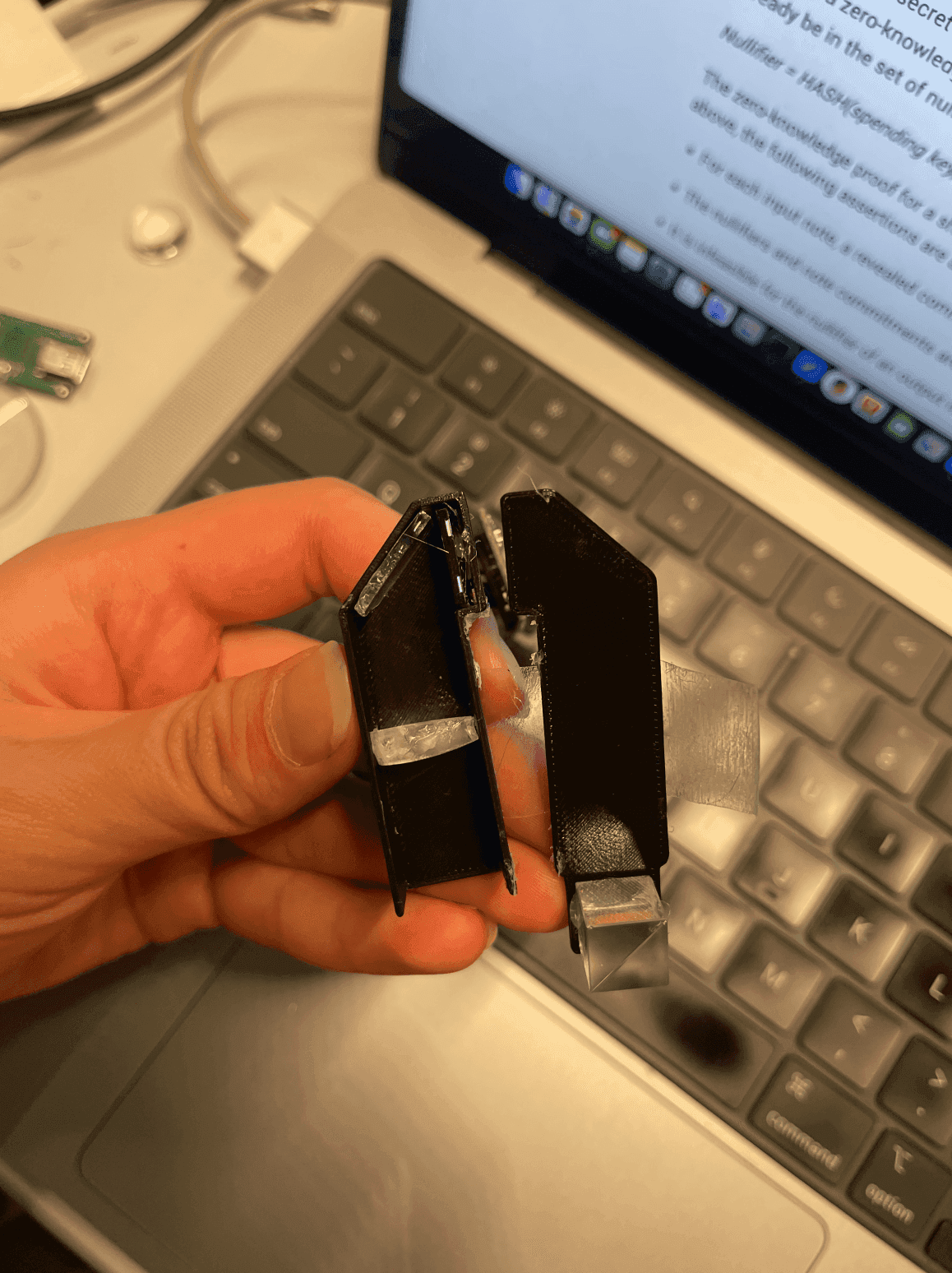
Using the parts of a Samsung S10+, we cut out the frame and put it on a set of sunglasses. From there, we created a custom optics system that relays the video straight to your eye.
Future Plans
We are still working toward an open-sourced guide to build these yourself, and will open source the project when it is complete, so anyone can build their own highly functional and affordable headset themselves.
Field notes