Wearables · 2024
Preemie
A speculative artificial womb and wearable incubator
Archive · 2024. Project notes reflect the work at the time of documentation.
- Year
- 2024
- Track
- Wearables
- Built by
- Camilla Gironi, Tryanni Chiaravalloti, Aida Baradari, Nasibe Dundar
- Status
- Prototype
Overview
In 2022, 10.4% of US live births were preterm, and most babies born before 34 weeks go straight into a plastic incubator bin. Preemie asks what neonatal care becomes when the incubator is worn and carried — a wearable, speculative artificial womb.
Build log
Motivation
In 2022, 10.4% of live births in the US were preterm. Most babies born before 34 weeks are placed in the neonatal intensive care unit in an incubator.
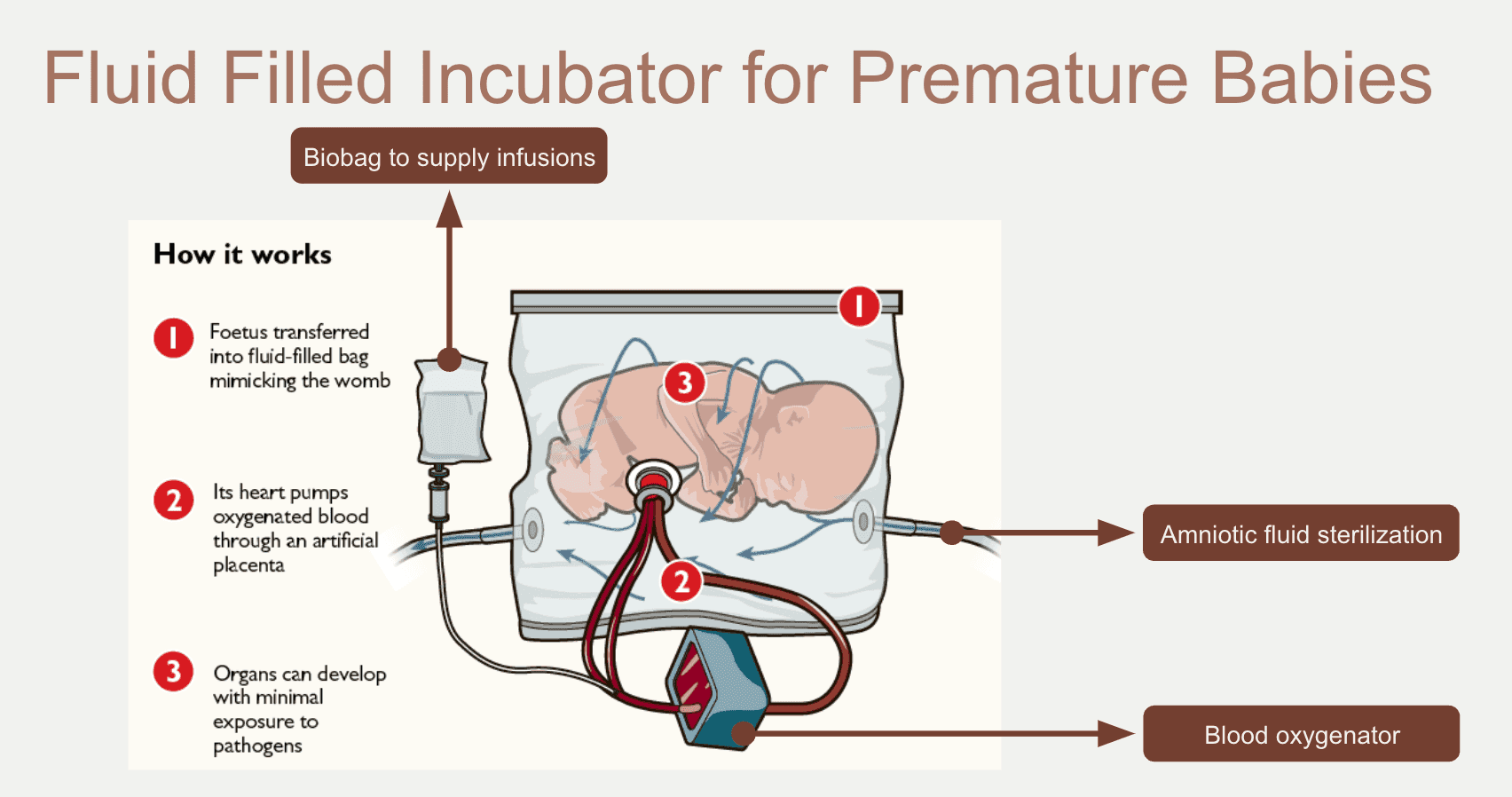
A typical incubator consists of a plastic bin that provides heat to the baby because the premies can't yet regulate body temperature.
However, babies born prematurely don't have fully developed organs, specifically their lungs, which are not yet ready to breathe air at birth.
Design
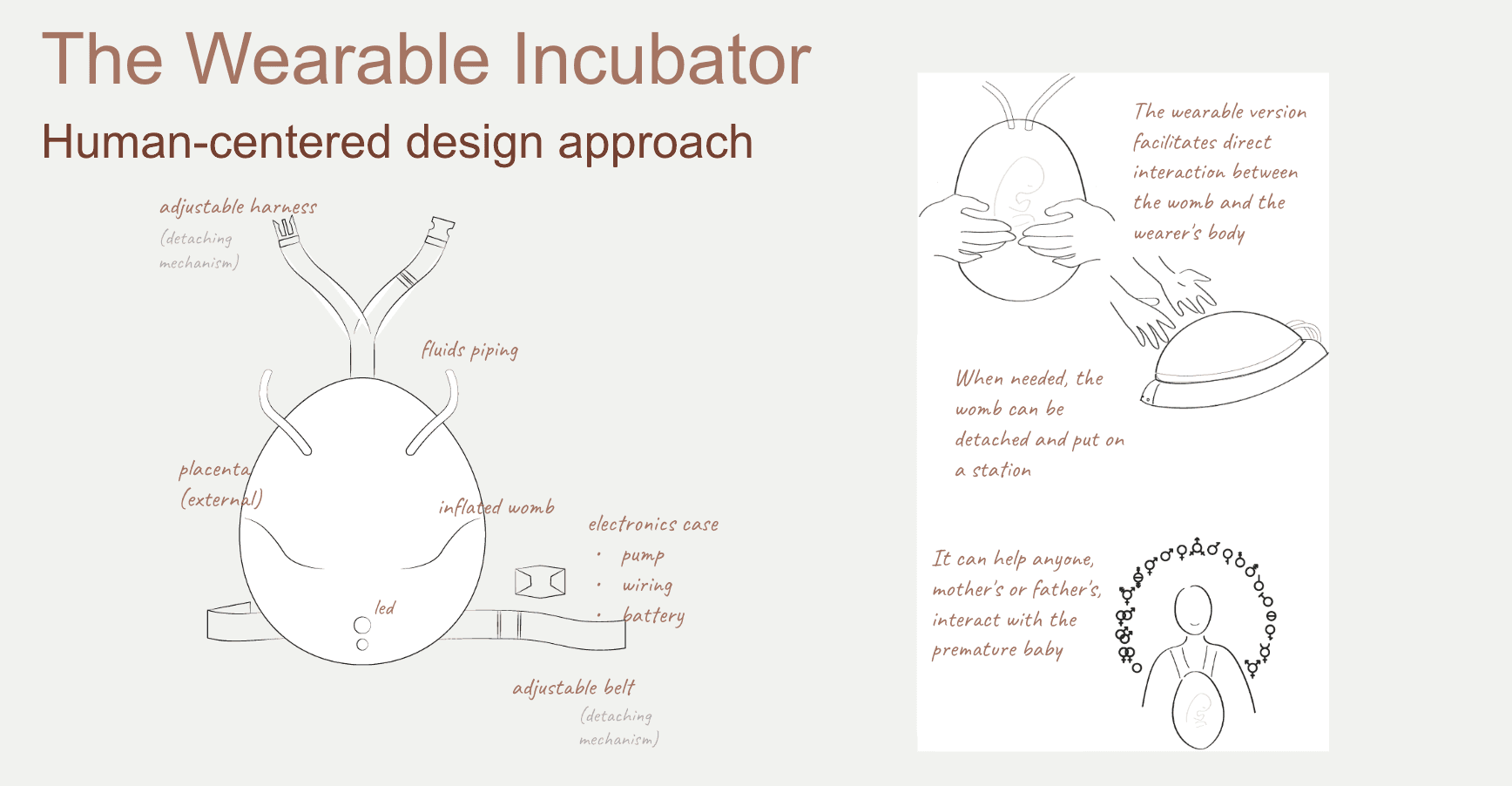
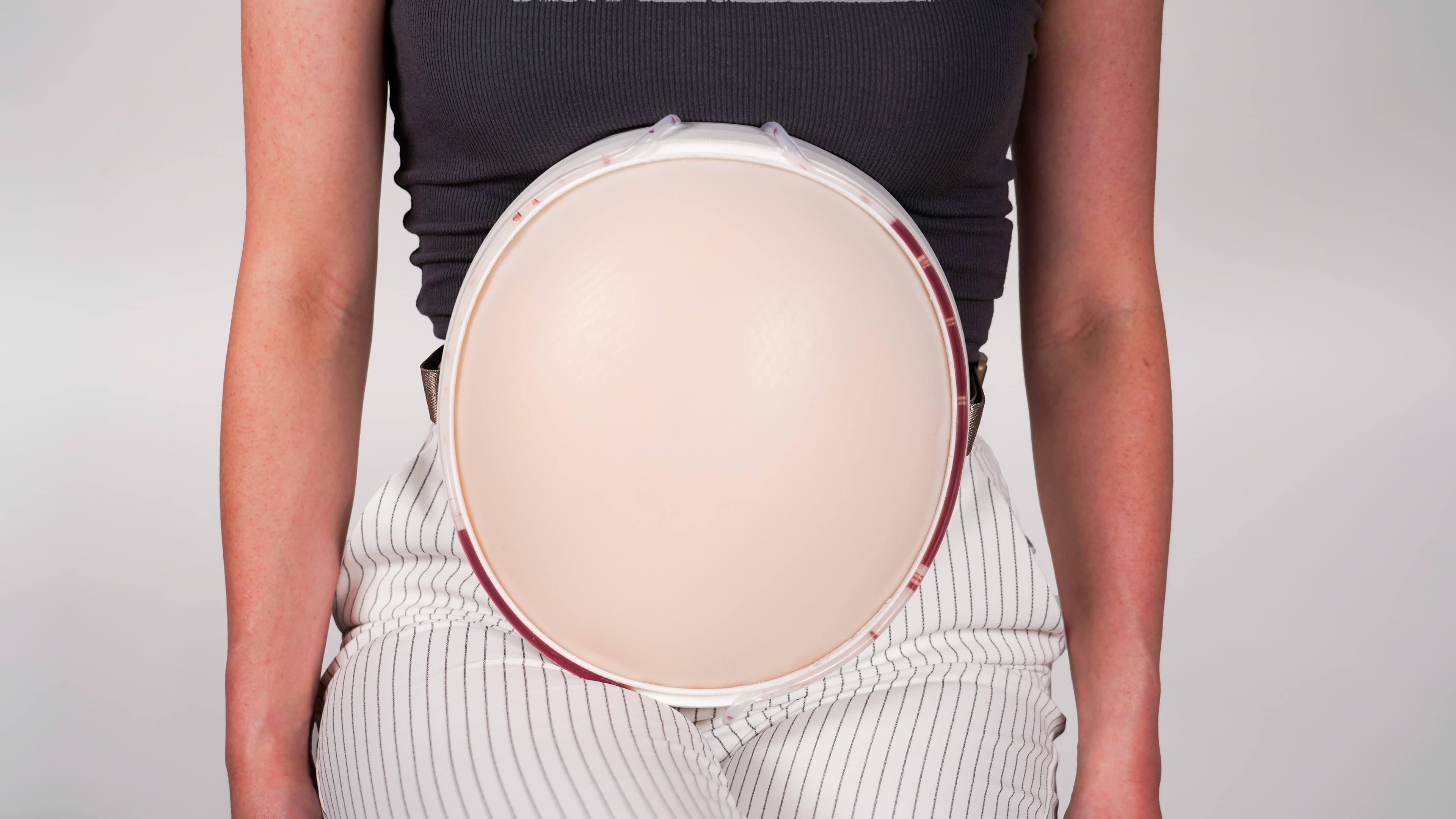
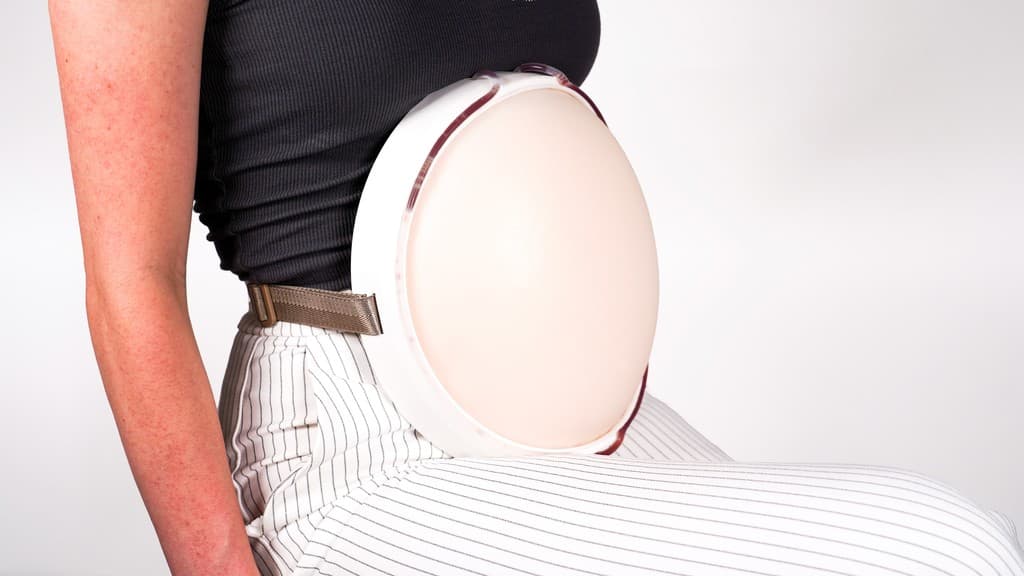
We created a speculative design prototype inspired by the interactions and biomechanics of a real womb during pregnancy, as well as current incubator designs.
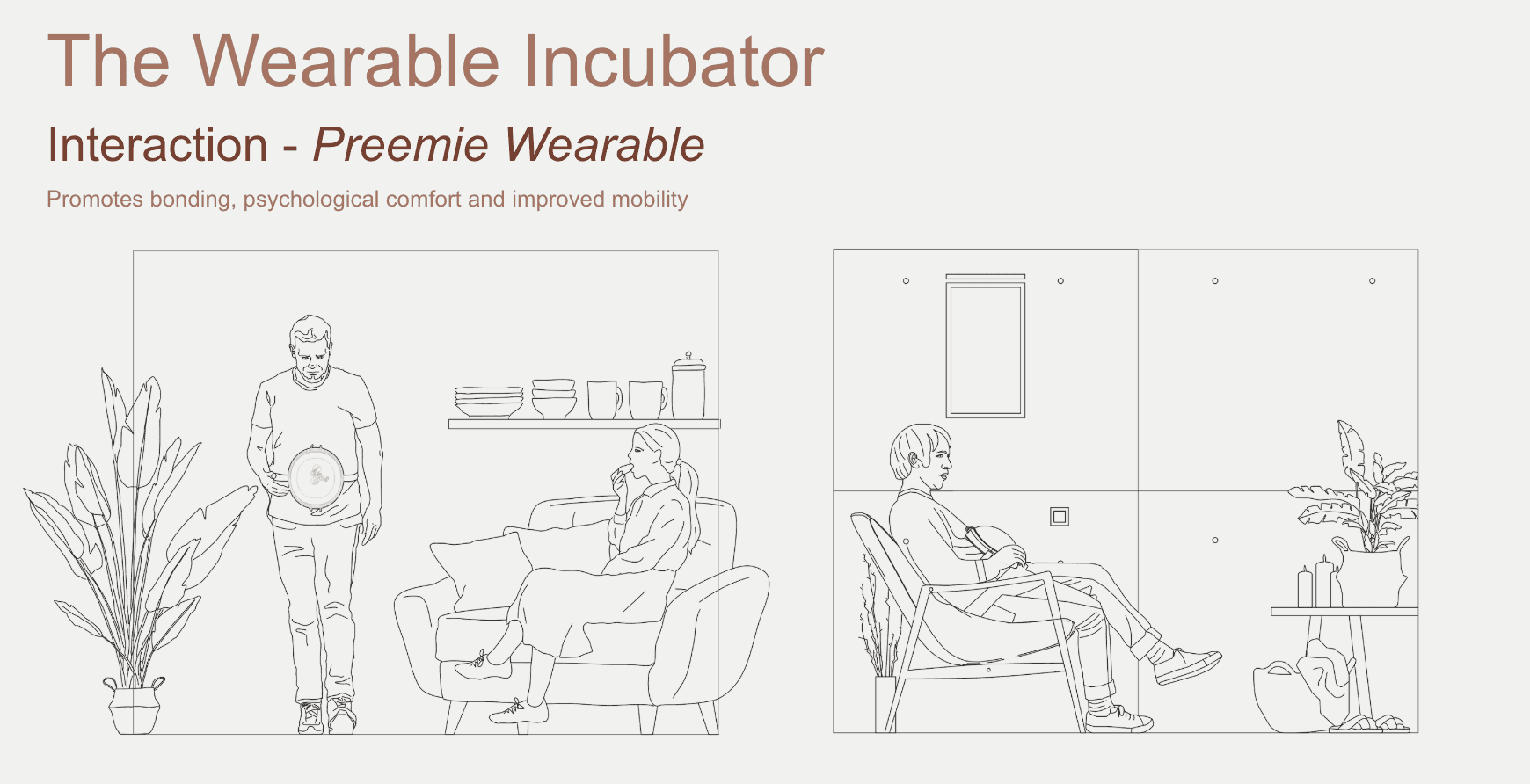
In our design process, we spent considerable time researching and thinking about the interactions that future parents of children born prematurely or entirely in artificial wombs would have with their children.
We believe that parents nursing their children through artificial wombs would still want to interact with their baby as they do with a biological womb, to foster the parent-child bond. However, artificial wombs could alleviate the physical strains on the mother's body.
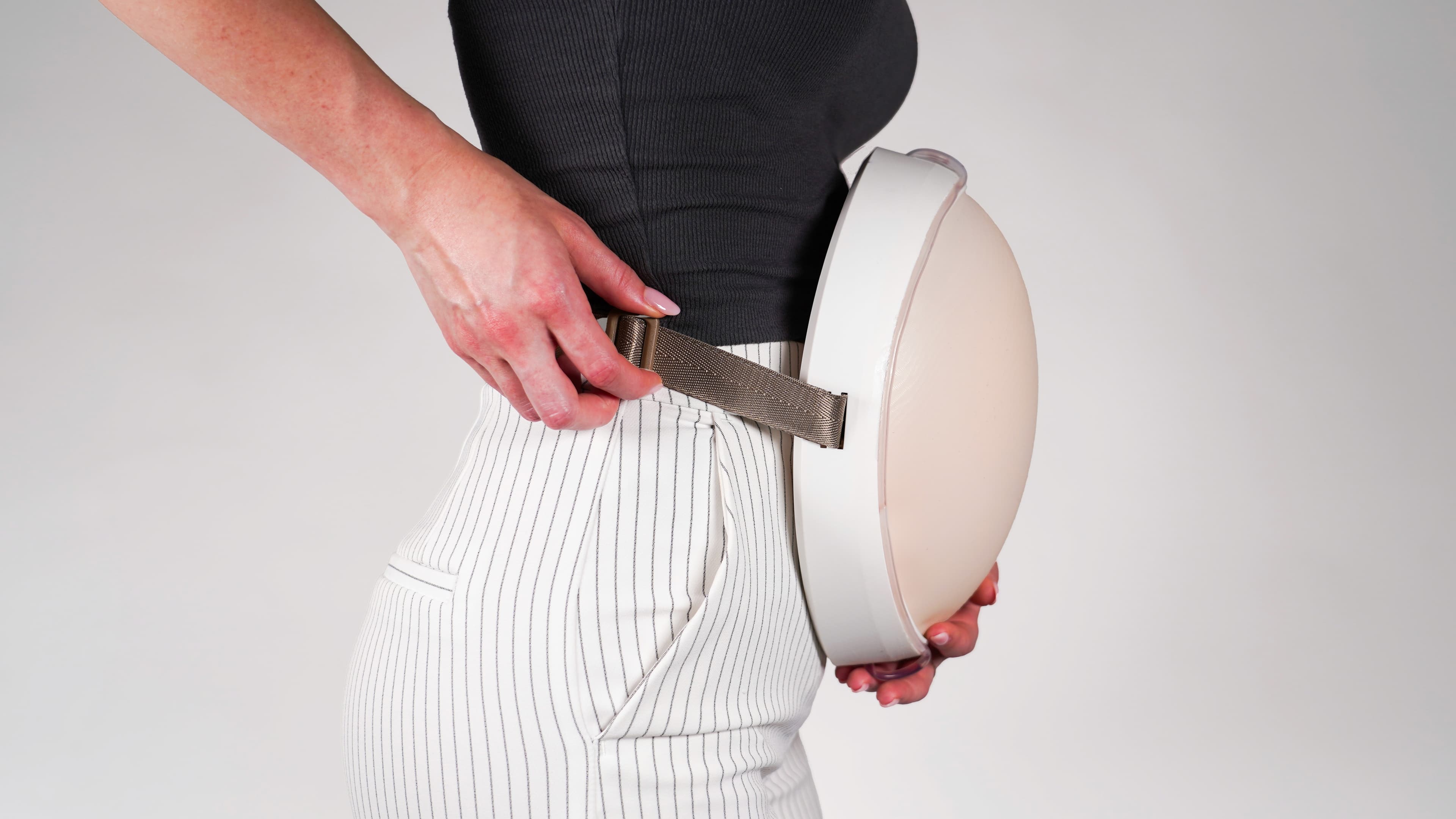
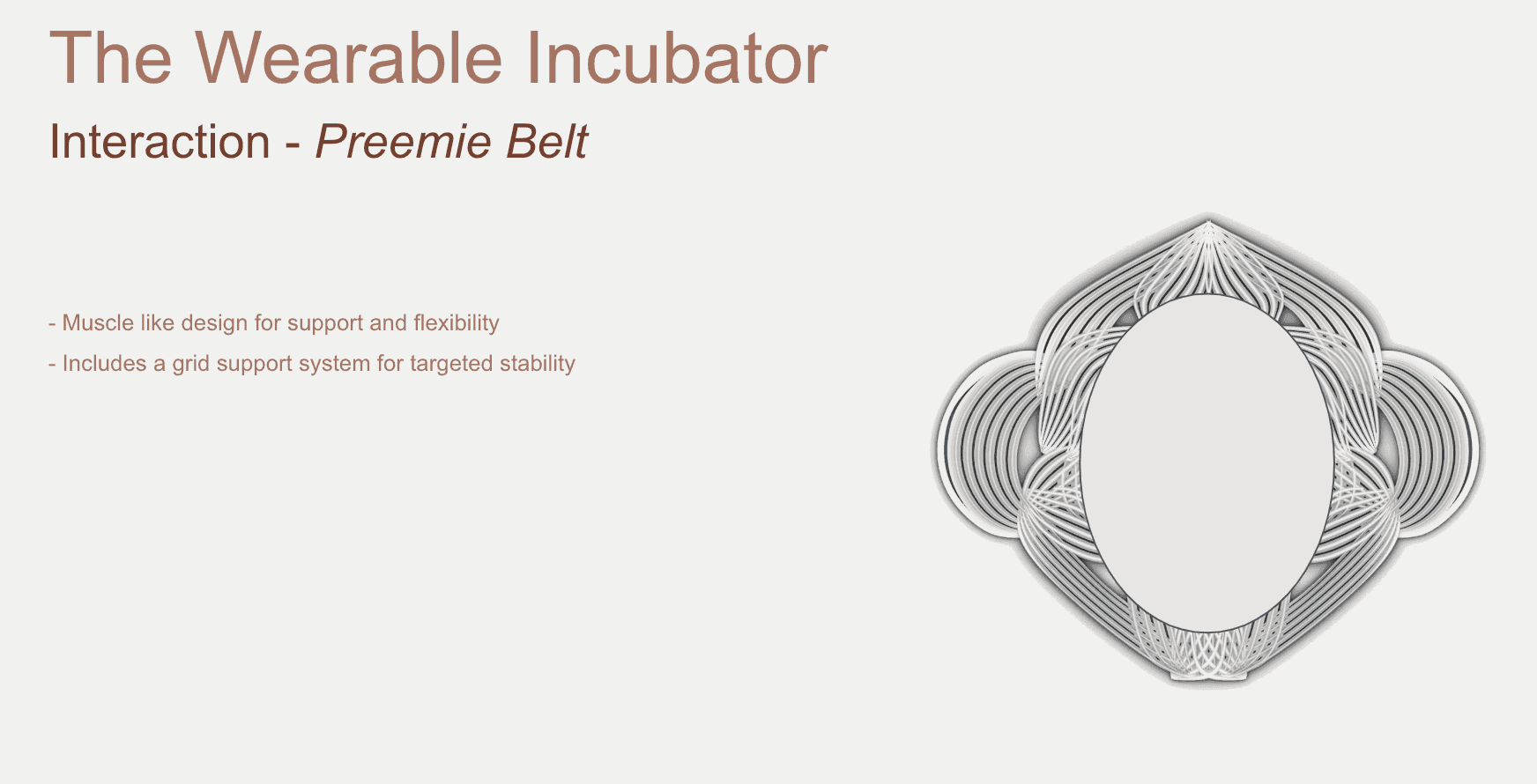
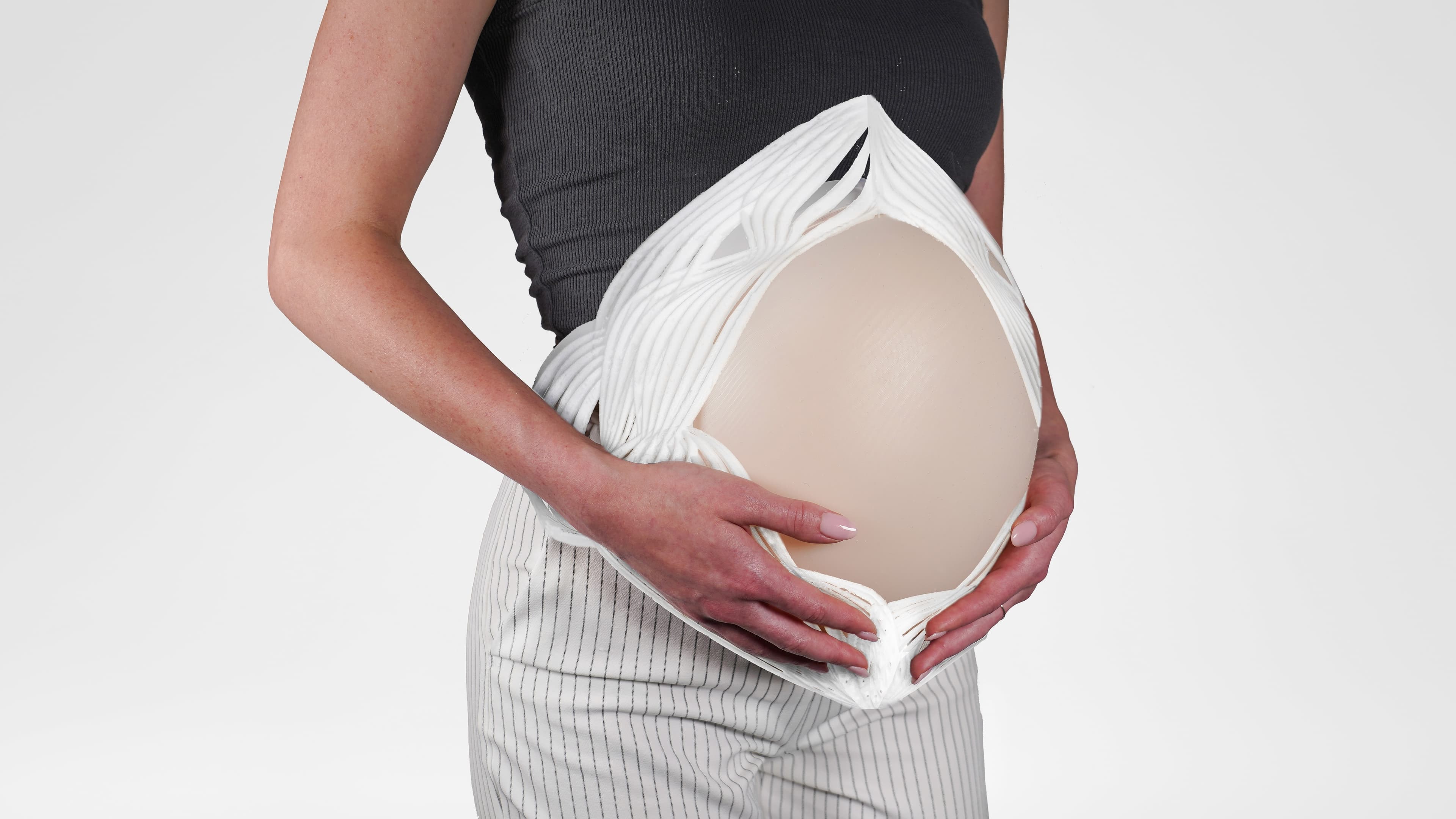
Preemie features a belt that allows anybody to "wear" their baby. Such a design could enable childbearing (or child "wearing") to be shared between parents in the future.
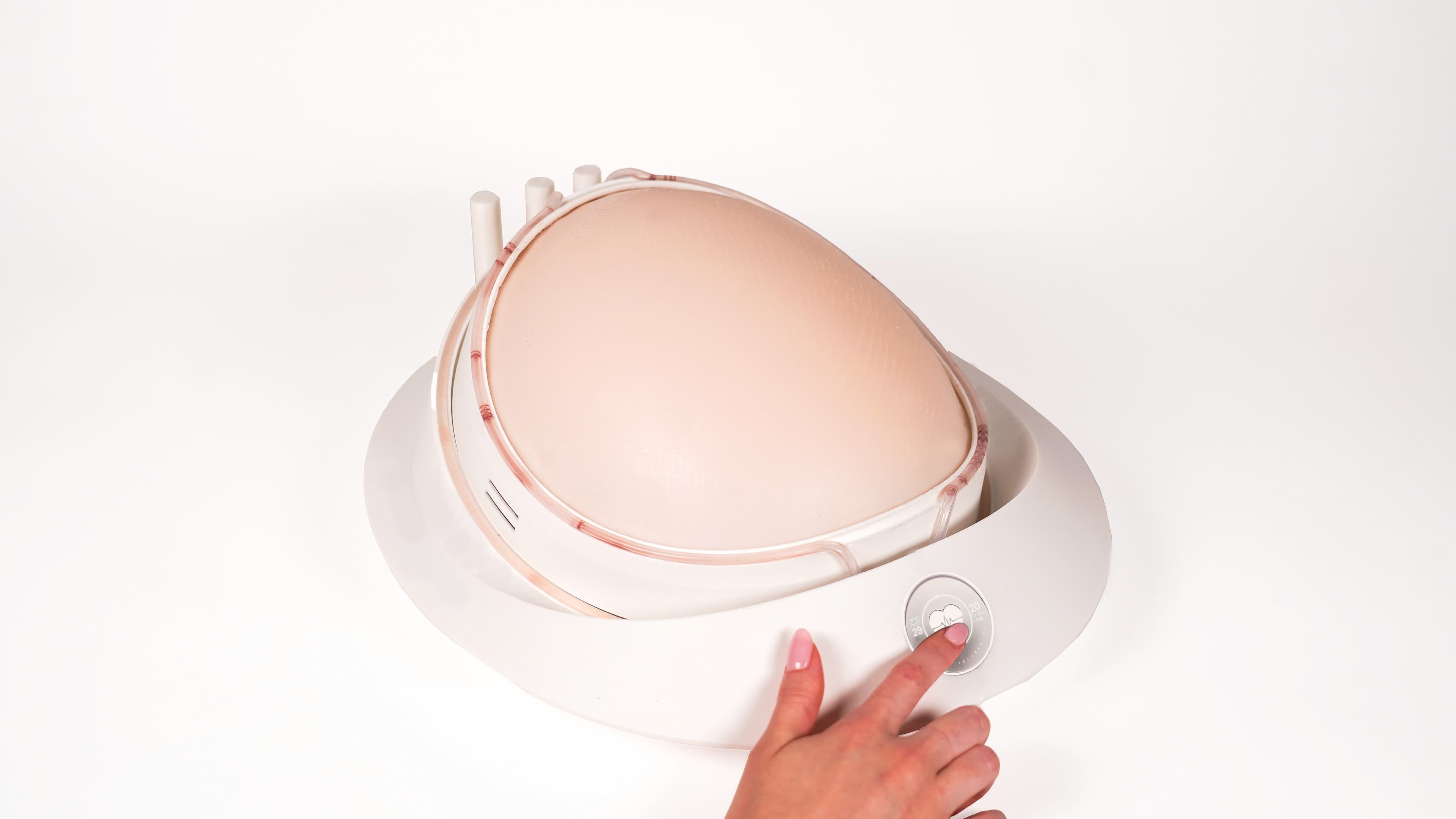
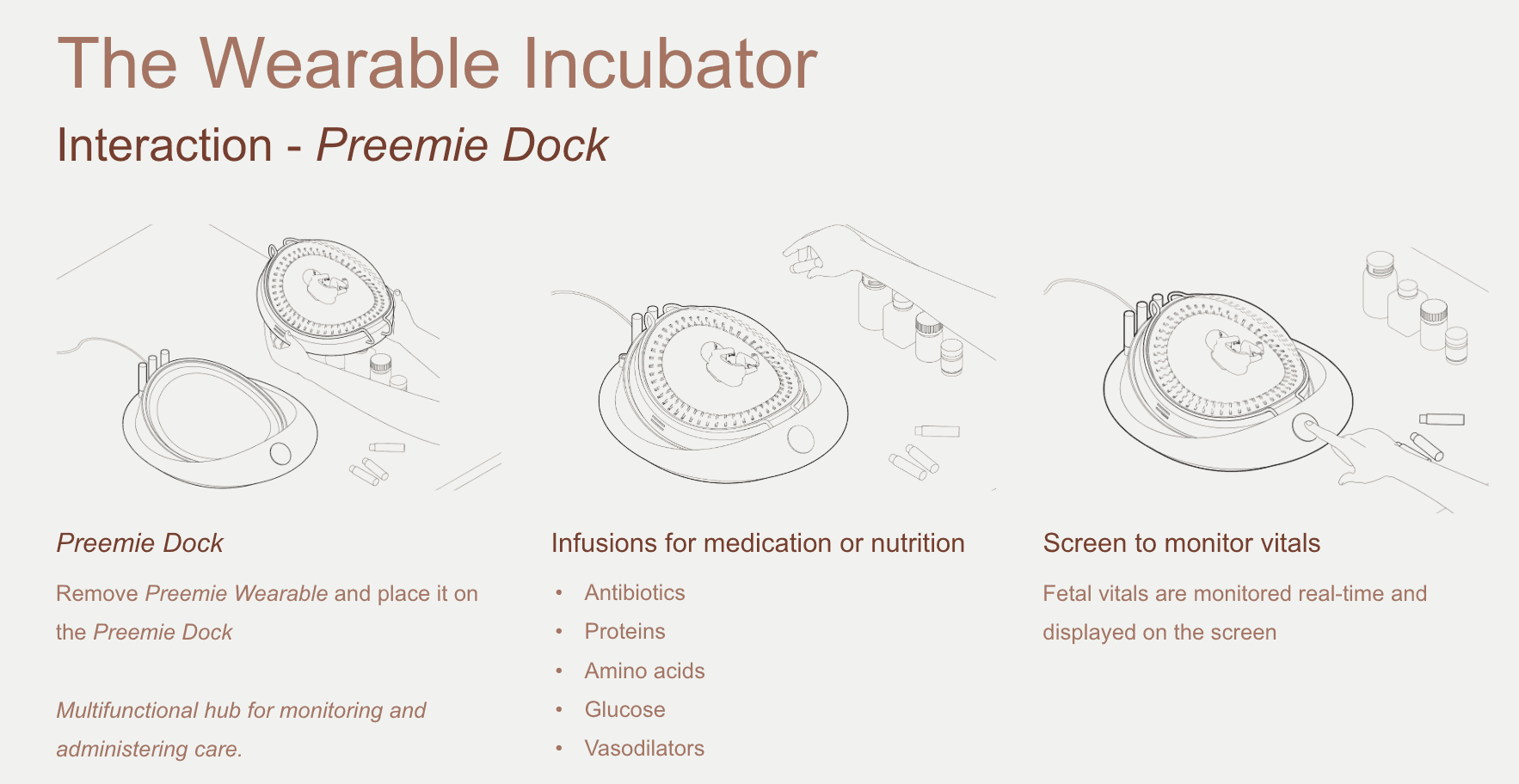
When at home, parents can keep Preemie in a docking station that replenishes nutrients and cleans biological waste products.
For additional back support and aesthetics, Preemie can be augmented with belt accessories.
Electronics
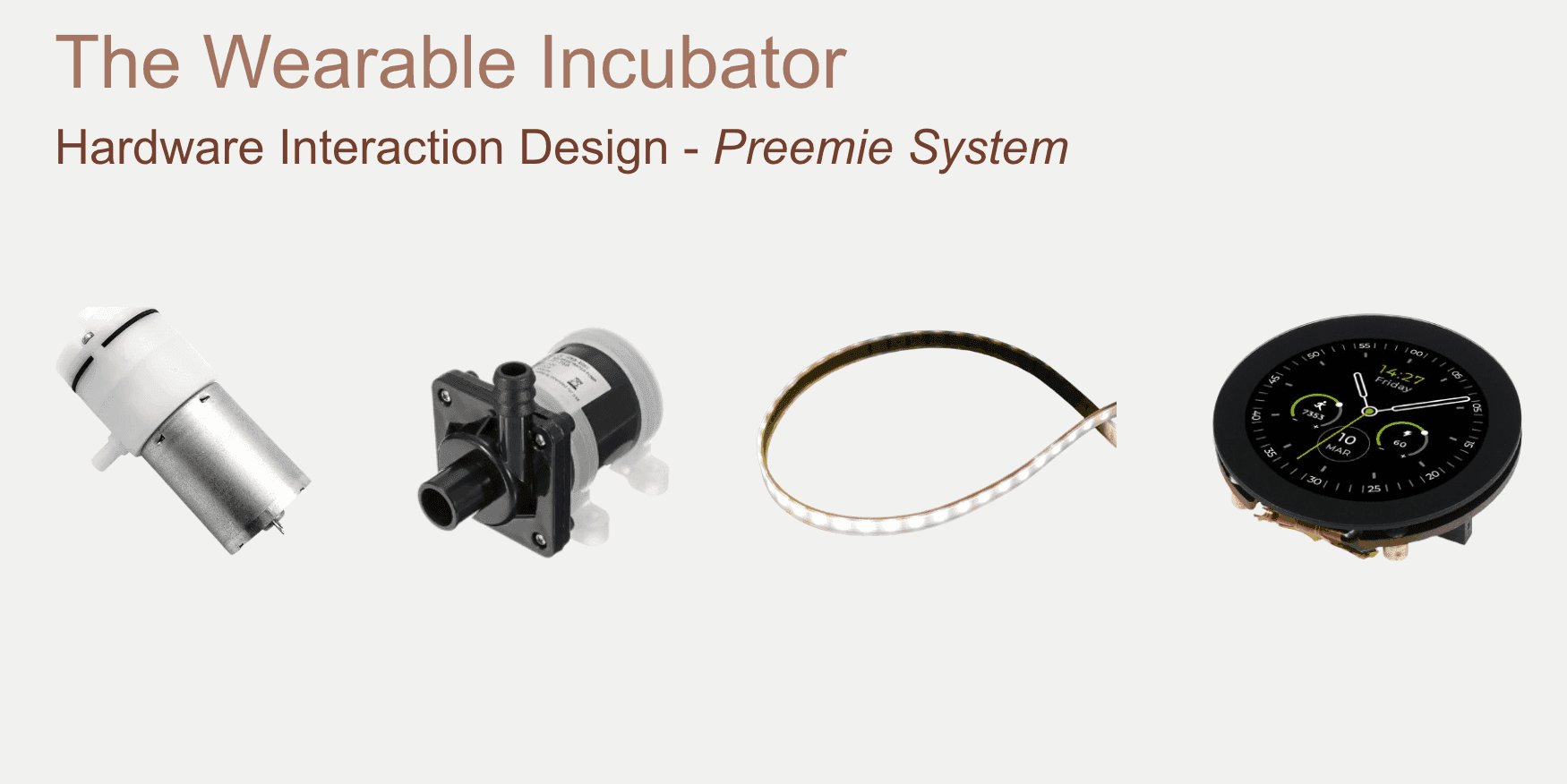
The prototype uses soft robotics techniques to simulate the sensation of breathing and pumps artificial fluid in and out of the womb.
What do you think about the future of artificial wombs and wearable incubators?
Field notes